
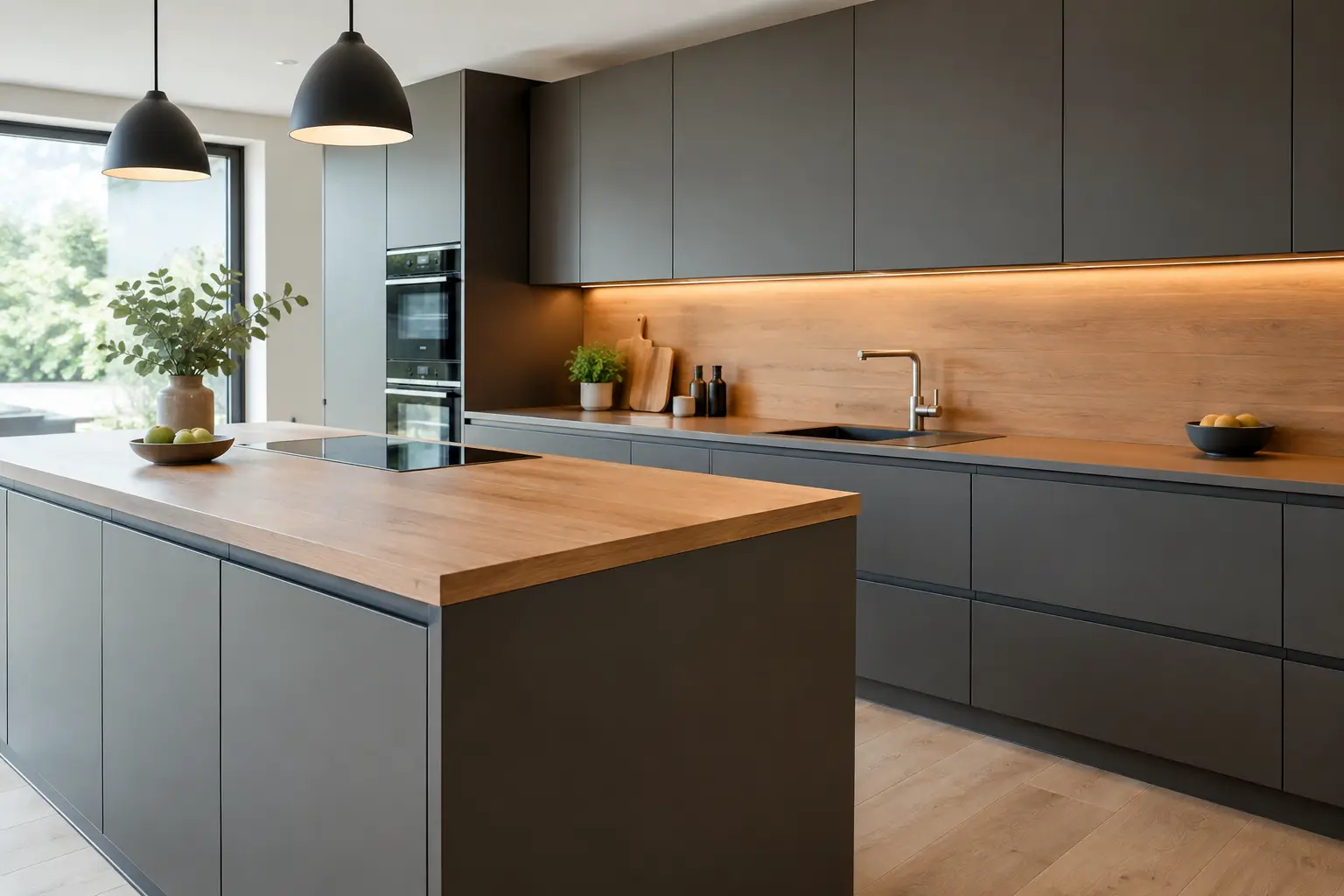
A kitchen’s weak points tend to reveal themselves early: a drawer that drops out of alignment, a door edge that swells beside the dishwasher, a corner cupboard that never quite works. So, are German kitchens durable? In many cases, yes - but the useful answer is not simply that they are made in Germany. Their longevity comes from a combination of industrial manufacturing, well-specified cabinetry, tested hardware and, crucially, a plan that suits the room and the people using it.
For a UK renovation or extension, that distinction matters. A beautifully engineered cabinet can still have a short and frustrating life if it is poorly fitted, exposed to repeated moisture or asked to support an unsuitable worktop. Equally, a considered German kitchen can provide years of reliable daily use without requiring a showroom-led budget.
Are German kitchens durable in everyday use?
Premium German kitchens are designed as furniture systems rather than a collection of unrelated cabinets. Manufacturers such as Nobilia and Schüller produce coordinated ranges of carcases, fronts, hinges, drawers, internal storage and decorative panels, with each component intended to work within a defined system.
That repeatability is one reason they perform well over time. Cabinets are precision-machined in factory conditions, then quality-checked before being delivered for installation. Consistent drilling positions, edge finishing and assembly methods help doors, drawers and tall units sit correctly from the outset. It may sound like a small detail, but accurate alignment reduces strain on moving parts and makes a kitchen feel composed years after fitting.
Durability also means more than surviving the occasional dropped pan. It is the ability to open a frequently used drawer thousands of times, adjust a hinge after normal settling, wipe down a door front without damaging the finish, and maintain a clean, functional interior. Good German kitchen systems are built around that routine reality.
However, “German kitchen” is not a universal quality mark. There are different price points, specifications and manufacturers, just as there are in any country. The better question is whether the proposed cabinetry, hardware, finishes and installation details are appropriate for your project.
What makes the cabinetry last?
Factory-built carcases and accurate construction
Factory-built cabinets offer an advantage over furniture that relies heavily on site assembly. A properly made carcase arrives square, securely constructed and ready to be installed as part of the overall layout. This supports cleaner lines, more dependable drawer operation and a more stable foundation for doors, worktops and integrated appliances.
The materials still need to suit their location. Modern kitchen carcases commonly use engineered board with a durable melamine surface and sealed edges. This is well suited to normal kitchen conditions, but it is not immune to standing water. A persistent leak beneath a sink, damaged sealant around a worktop or steam escaping from an incorrectly used dishwasher can affect any board-based cabinet over time.
The practical benefit of a considered specification is that vulnerable areas can be anticipated. Sink units, dishwasher surrounds, end panels and plinths deserve particular attention during planning and fitting. Small protective measures at these points often make a significant difference to the kitchen’s long-term condition.
Hinges, drawers and internal fittings
Moving parts receive the hardest treatment in a working kitchen. Soft-close hinges and drawer runners should feel controlled rather than merely quiet: doors should close evenly, and loaded drawers should extend and return without scraping or racking.
Quality hardware is engineered for repeated use and usually allows adjustment. That matters after installation, particularly in a new extension or recently altered property where walls, floors and surrounding finishes may settle slightly. Being able to fine-tune a door is not a sign of failure. It is part of maintaining an accurately fitted furniture system.
Internal storage contributes too. A deep pan drawer with appropriate runners is generally more practical, and often more durable in use, than repeatedly overloading a narrow base cupboard shelf. The same applies to tall pull-outs, larder units and waste systems. They should be selected for their capacity and purpose, not simply because they look impressive in a visualisation.
Front materials and edge quality
The finish you choose affects both appearance and maintenance. Melamine, laminate, lacquered, veneer and glass-effect fronts all have different strengths. A textured laminate can be exceptionally forgiving in a busy family kitchen, while a refined matt lacquer may need more careful cleaning to preserve its surface. Veneer brings natural variation and warmth, but should be chosen with an understanding that timber is a natural material rather than a uniform printed pattern.
Handleless kitchens deserve a similarly practical conversation. Their clean horizontal lines suit contemporary British homes, but the recess channels, rail systems and door edges should be easy to clean and comfortable to operate. A design is durable when it continues to be pleasant to live with, not only when it photographs well on installation day.
Planning is part of durability
A durable kitchen begins before the order is placed. The layout determines where heat, water, steam, weight and daily traffic will fall. Poor planning can create avoidable stress: a dishwasher placed where its door obstructs a main route, a sink squeezed into an unsuitable cabinet, or a heavy appliance without adequate ventilation and service access.
Detailed CAD planning is valuable because it tests these decisions early. It allows cabinet widths, clearances, opening angles, appliance housing and worktop joins to be considered against actual room dimensions. For older UK properties, where walls are rarely perfectly straight and service positions can be inconvenient, technical drawings are especially useful for identifying where filler panels, levelling or remedial work may be needed.
Worktop selection also changes the equation. Stone, ceramic, compact laminate, solid surface and timber all place different demands on cabinetry, support and care. A heavier material requires appropriate support and a competent templating and fitting process. A timber worktop can age beautifully, but only if it is maintained as the material requires. There is no single best choice, only the right one for the way you cook and live.
The installation standard matters as much as the furniture
Even excellent factory-built furniture depends on skilled installation. Cabinets need to be level, securely fixed and correctly joined; doors and drawers need final adjustment; and appliances must be installed to their manufacturers’ requirements. Worktop cut-outs, splashback interfaces, plumbing connections and silicone seals all deserve the same care as the visible cabinetry.
It is sensible to coordinate delivery around your installer’s programme rather than treating delivery day as the finish line. Check the room is dry, plastering and flooring work are at the appropriate stage, and any required electrical or plumbing first-fix positions have been confirmed. Store packaged furniture safely and inspect it promptly before fitting begins.
This is also where a precise, itemised quotation earns its keep. Knowing exactly which panels, fillers, handles, lighting components, appliance housings and internal fittings are included reduces the risk of unsuitable substitutions or last-minute compromises on site.
How long should a German kitchen last?
With sensible use, care and installation, premium cabinetry should serve a household for many years. The finish may show evidence of life before the cabinet structure does, particularly in high-contact areas around handles, bins and sink zones. That is normal. A kitchen is working furniture, not a museum piece.
Rather than looking for an unrealistic lifetime promise, look for evidence of support: a meaningful manufacturer warranty, a clear product specification, available adjustment options and a supplier that can explain how the system is assembled. LindenHaus provides factory-built Nobilia and Schüller furniture with a five-year guarantee, alongside the planning detail needed to make the specification work in a real UK home.
Care is straightforward but worthwhile. Wipe spills promptly, avoid abrasive cleaners, do not allow steam to vent directly onto cabinet edges, and address plumbing leaks immediately. Use the adjustment built into hinges and runners if alignment changes over time, preferably with advice from a competent installer.
A durable kitchen is not simply one made from thicker materials or marketed with the right country of origin. It is one in which the cabinetry, finish, storage, appliances, worktop and installation have been selected as a coherent whole. Start with the way your household actually uses its kitchen, then ask for the drawings and specifications that prove the design can support it.
Planning a supply-only German kitchen?
We supply Nobilia and Schüller kitchens across the UK on a supply-only basis, with full design service, technical drawings and post-delivery support for your installer.